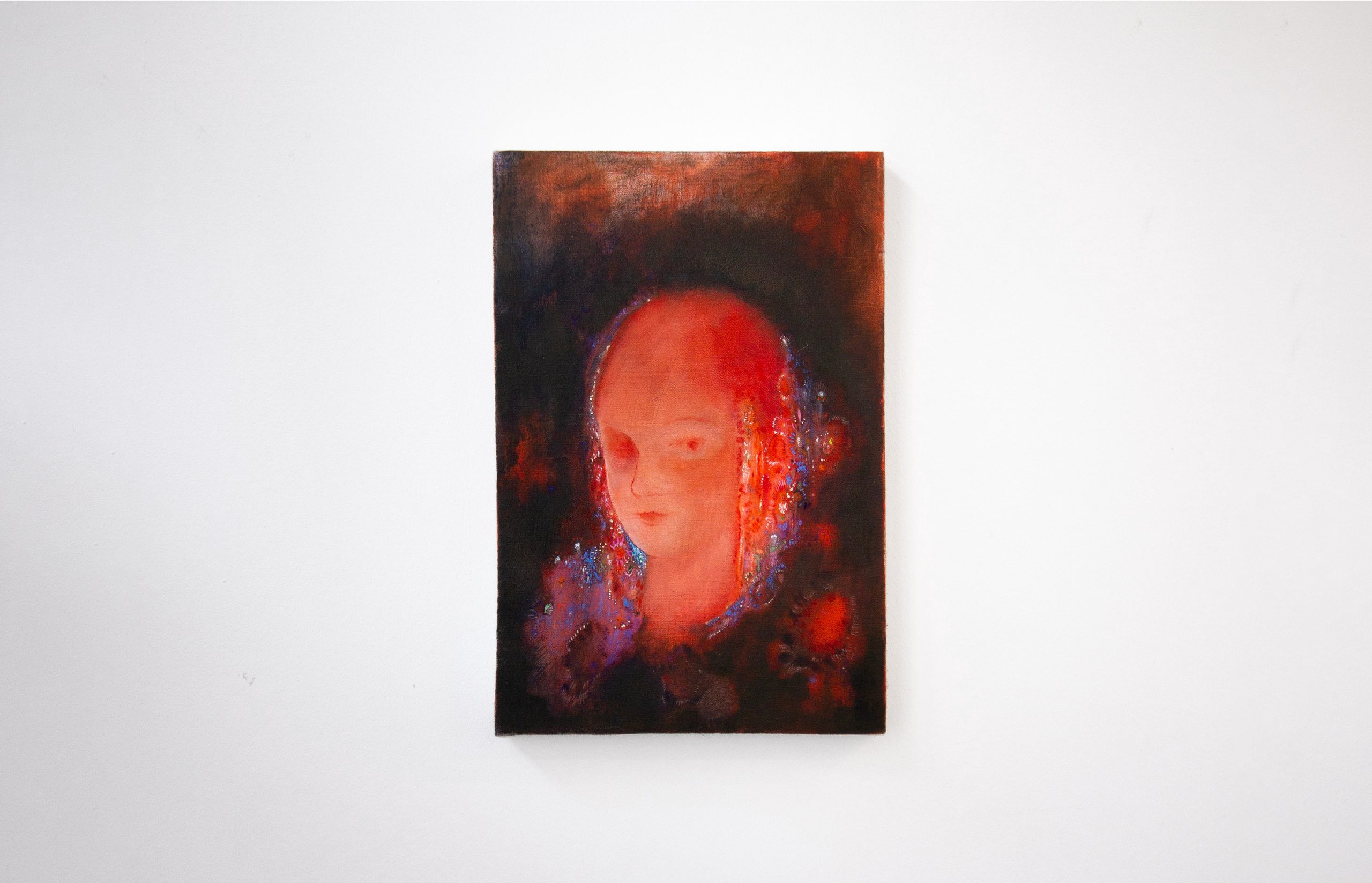
Lou-Maria Le Brusq
draps de veillée
28.03 — 19.05.26
In her work, Lou-Maria Le Brusq prefers apparition over representation. To summon rather than impose, without a doubt: therefore, no desire, no attempt to force the confinement of anything — could it be a figure that asserts itself or a thought that passes through — into the confines of a painting. And so Lou-Maria pairs the hand with the mind: the “hand that knows the image,¹” as she puts it. The mind that sets it in motion in order to open up a space — if not sanctuary — capable of allowing its inhabitants to emerge, no matter if they advance only with the suppleness of a ghost. The realm of the visible in her paintings will be, above all, a matter of haunting rather of hunting².
Thus, Lou-Maria first works with underlying fields of colors that, revealing no preconceived idea, stubbornly open only into possibilities. It is intuition at work, a breach in the making. She herself speaks of a “premonition of the senses lodged within emotion,” of an “immense love that escapes the passivity of the eye³” and one easily understands all this through active viewing. Whether with soft pastels or pigments, in a fluid interplay between sharpness and blur, by removing or adding material, lifting and scraping as needed, Lou-Maria prepares the background of a narrative yet to come — certainly not one already written.
At the end of the journey, there will inevitably be a fulfillment as Cristina Campo might put it. Her words accompany Lou-Maria in these moments of pictorial wandering, which never exist without a form of devotion and commitment: “But surely, to the one who thus fills the desert with hypotheses, the dark night with images my soul to that one it will be said: you have received your reward. But surely, to the one who thus fills / the desert with hypotheses / the dark night with images, my soul / to that one it will be said: you have received your reward.⁴”
Without all this, we might ask: what is the point of making images at all if only to strip them bare, to deny them any gift of color? In Lou-Maria’s mind it is above all a matter of hospitality, of making room for certain forms of coexistence in spaces that are necessarily transient, such as the sea, the mountains, or the woods. These are all imprecise places with ever-shifting and elusive boundaries such as those that inhabit the silent, profound, and timeless Brittany where the painter immerses herself to better capture its colors and mysteries. It then becomes a matter of making an appointment, to gather a circle with these inhabitants, whom it is better to regard as creatures rather than beings in the strict sense. We must walk, and walk attentively, so as not to miss anything that calls for such hospitality and a certain gratitude: “At every stop we sing a new friend, at every stop we mourn a shadow,⁵” Lou-Maria writes in one of her poems. Friend, shadow — ultimately, everything deserves to be welcomed. For there is not a single existence but “modes of existence⁶” not necessarily close to our own, yet all deserving to be sensualized and understood in their intrinsic qualities, in what ensures both their unity and their permeability to other forms of existences.
Poetry, as we understand, is no stranger to all this — in fact, it presides over it. This is no coincidence: we finds in the English poet Dylan Thomas a similar necessity, he who asserted that “a poem […] always needs a home/hearth of images⁷, because its center is that home/hearth of images.” Nevertheless, as he states further on, “each image contains within itself the seed of its own destruction.⁸” Then, to create such a home, while taking into account the possibility of erosion, of dissipation, of exchange between what one takes and what one leaves behind. Which ultimately amounts to speaking, as Lou-Maria does when reflecting on what poetry can be and what it brings to painting, of a “gratuitous splendor.⁹”
— Written by Guillaume Blanc-Marianne
¹ Lou-Maria Le Brusq, unpublished notes.
² As Georges Didi-Huberman argued, drawing on Aby Warburg. Georges Didi-Huberman, L’Image survivante. Histoire de l’art et temps des fantômes selon Aby Warburg, Paris, Minuit, 2002.
³ Lou-Maria Le Brusq, Malédiction, Rennes, RAG Éditions, 2024, p. 17.
⁴ Cristina Campo, Le Tigre Absence, trad. fr. Monique Baccelli, Orbey, Éditions Arfuyen, 2023, p. 21.
⁵ Lou-Maria Le Brusq, Malédiction, op. cit., p. 8.
⁶ As Etienne Souriau put it, Les différents modes d’existences, Paris, PUF, 2009.
⁷ Dylan Thomas, L’œuvre poétique. I, Le code de la nuit, trad. fr. Hoa Hôï Vuong, Orbey, Arfuyen, 2024, p. 11.
⁸ Ibid., p. 12.
⁹ Lou-Maria Le Brusq, unpublished notes.
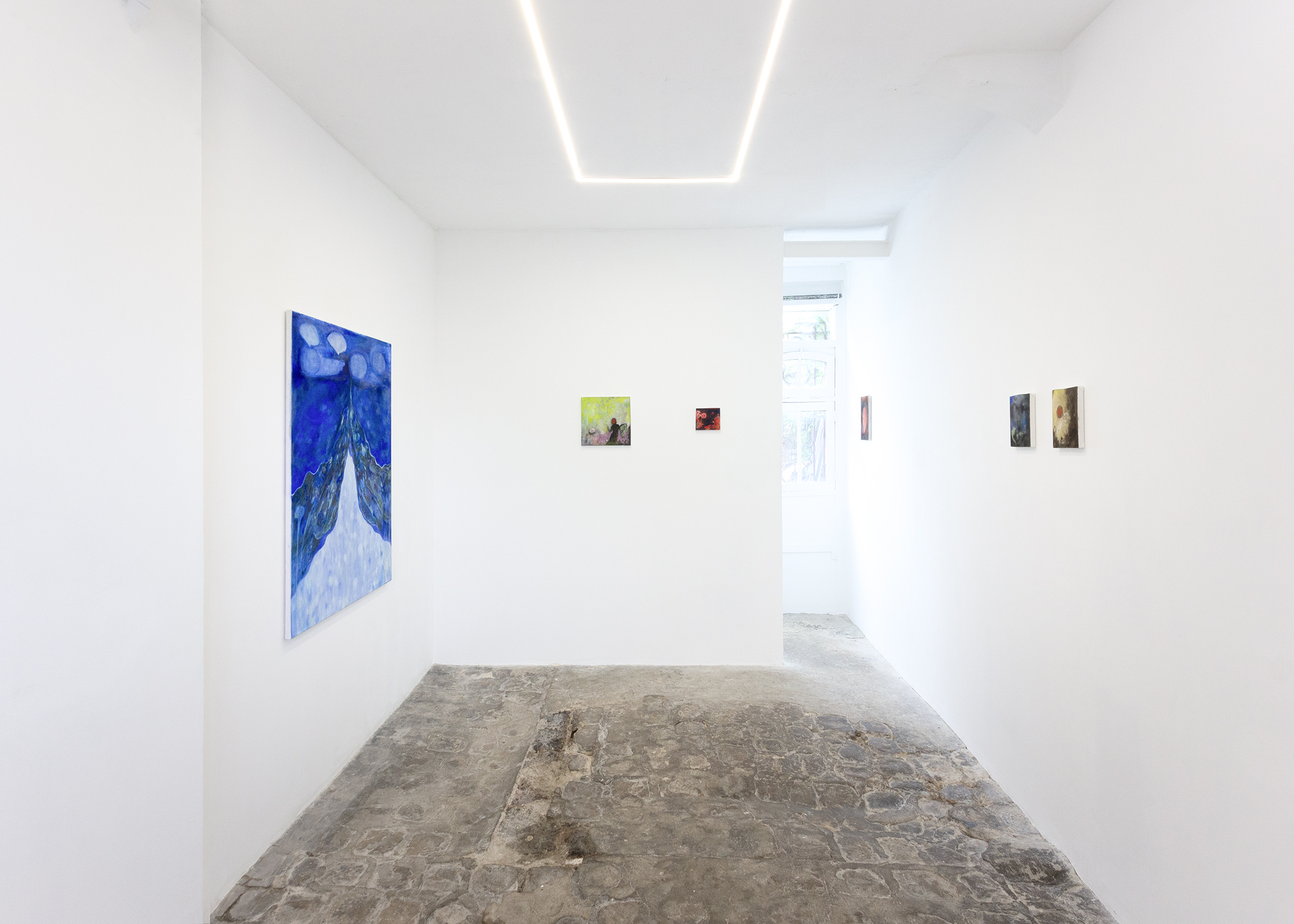
Exhibition view, draps de veillée, 2026, Lou-Maria Le Brusq, Pony, Montreuil.
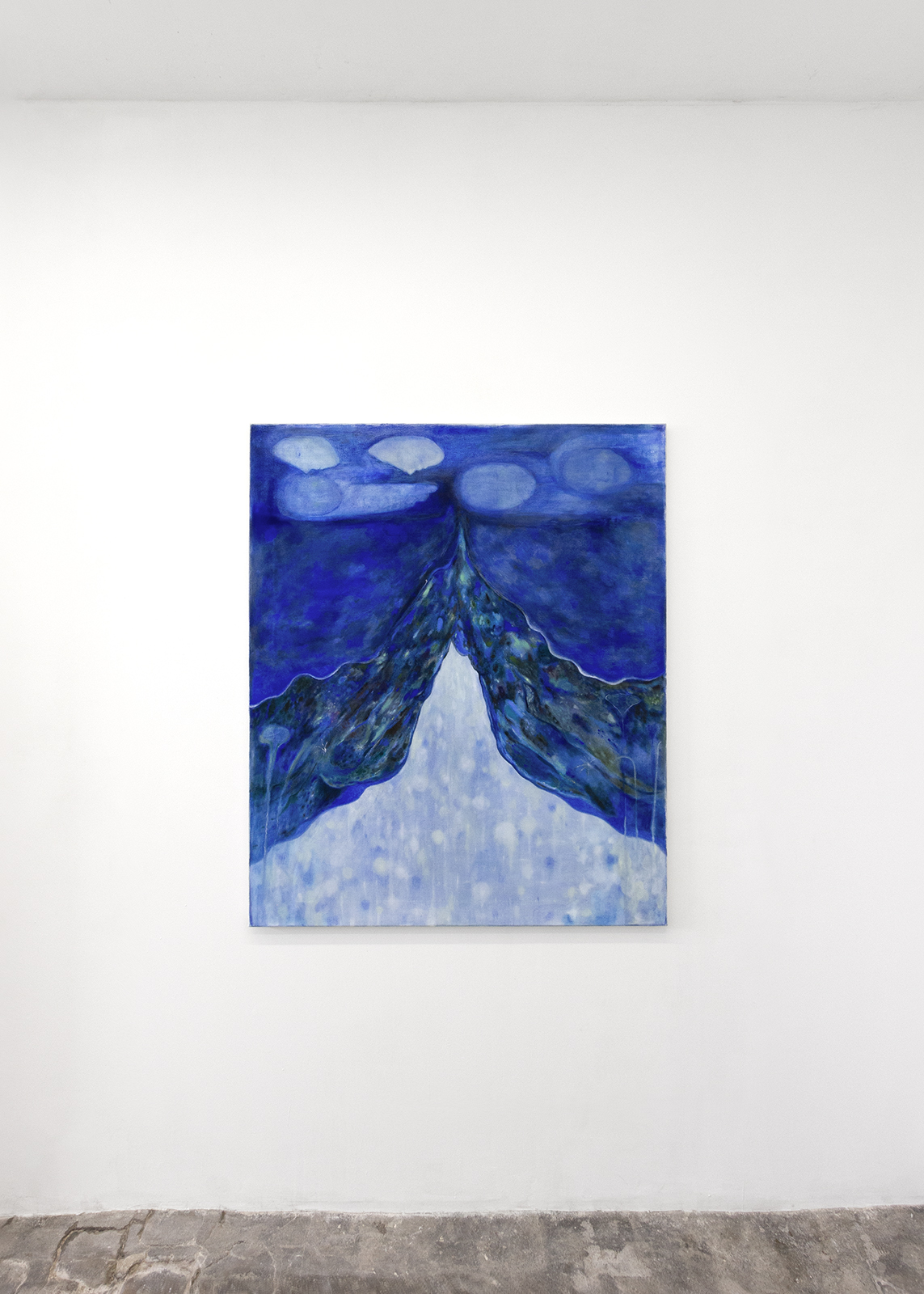
Lou-Maria Le Brusq, les habits de patience, 2025, pigments, oil paint, soft pastel on linen sheet, 120 × 100 cm.
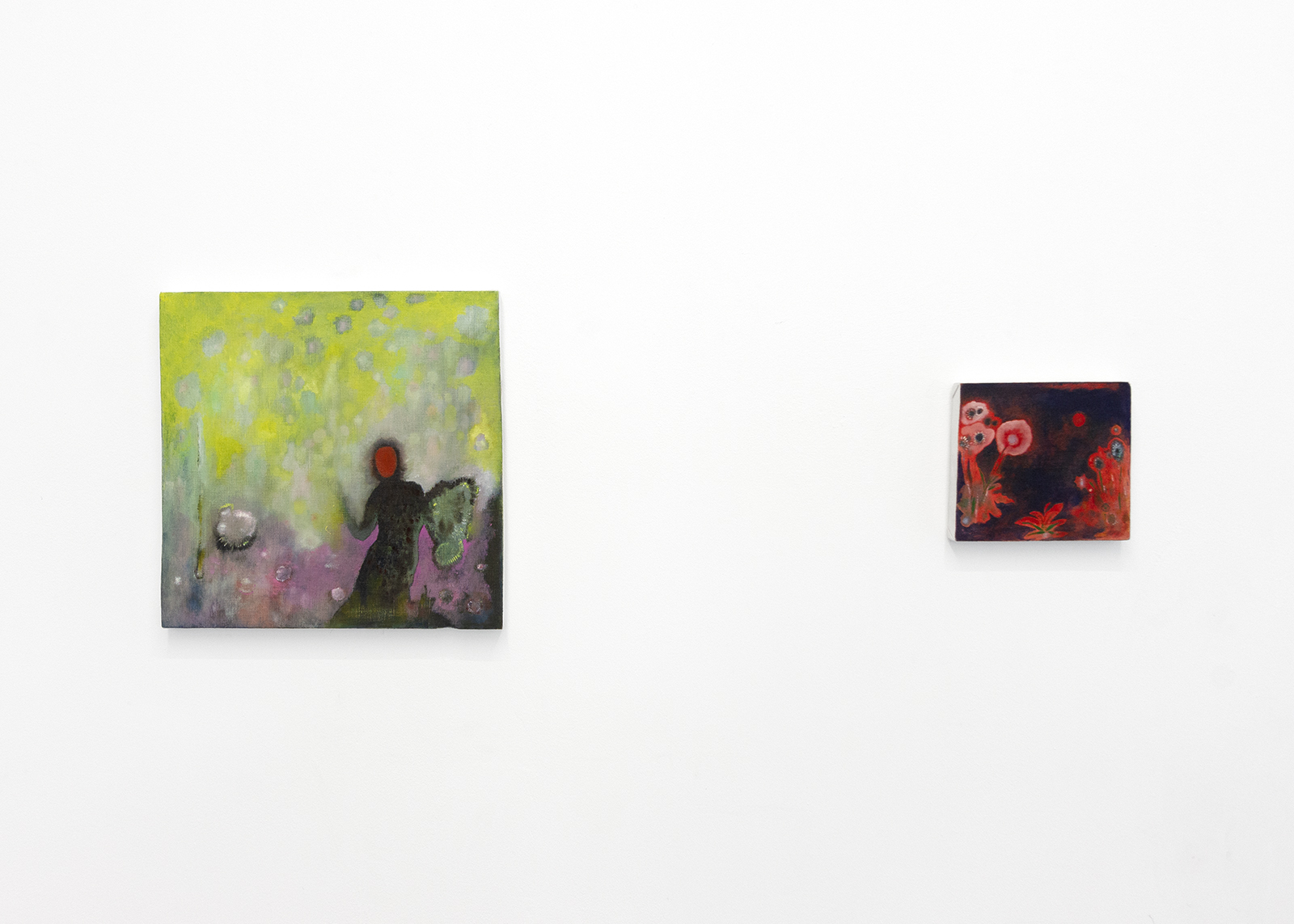
Exhibition view, draps de veillée, 2026, Lou-Maria Le Brusq, Pony, Montreuil.
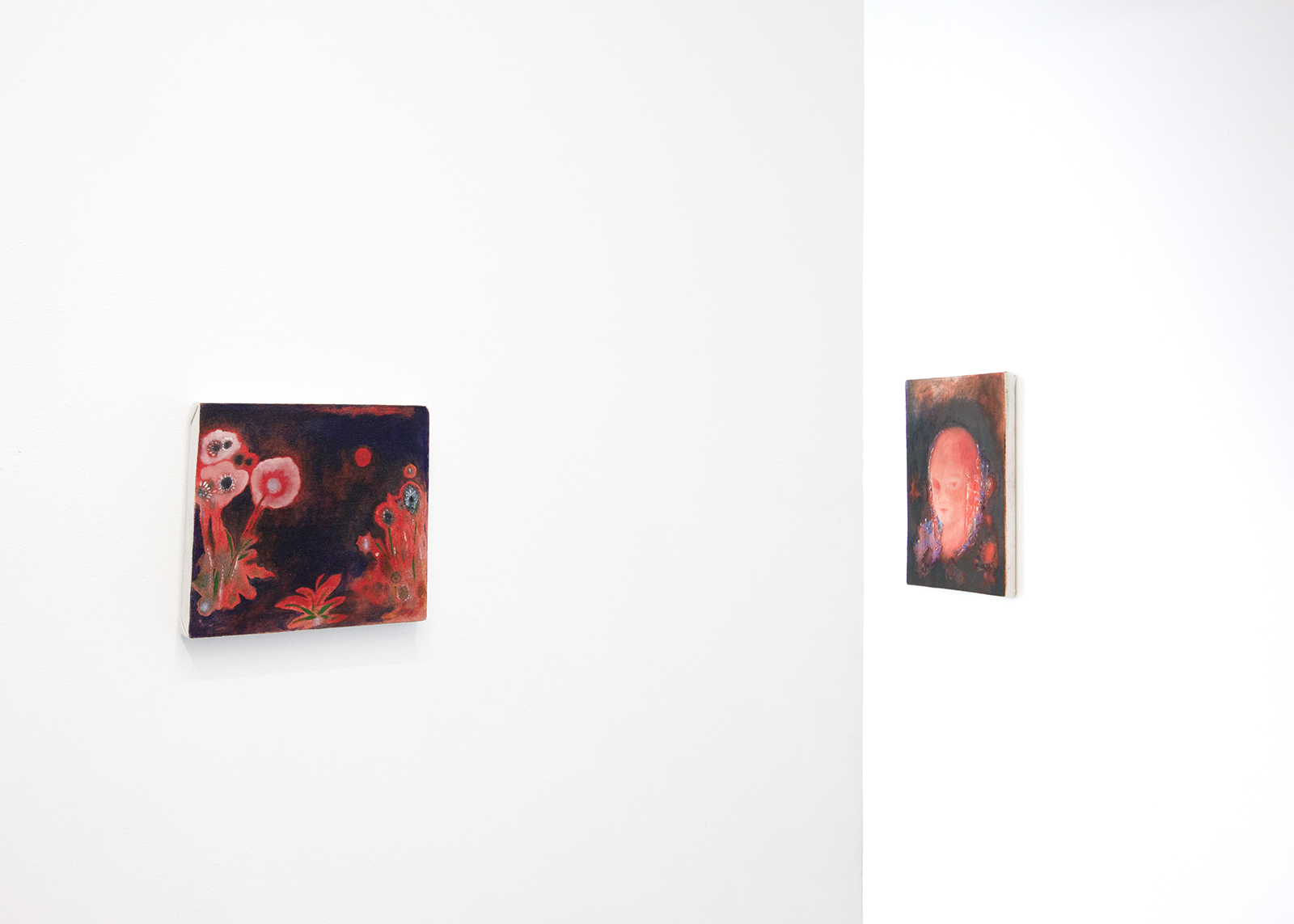
Exhibition view, draps de veillée, 2026, Lou-Maria Le Brusq, Pony, Montreuil.
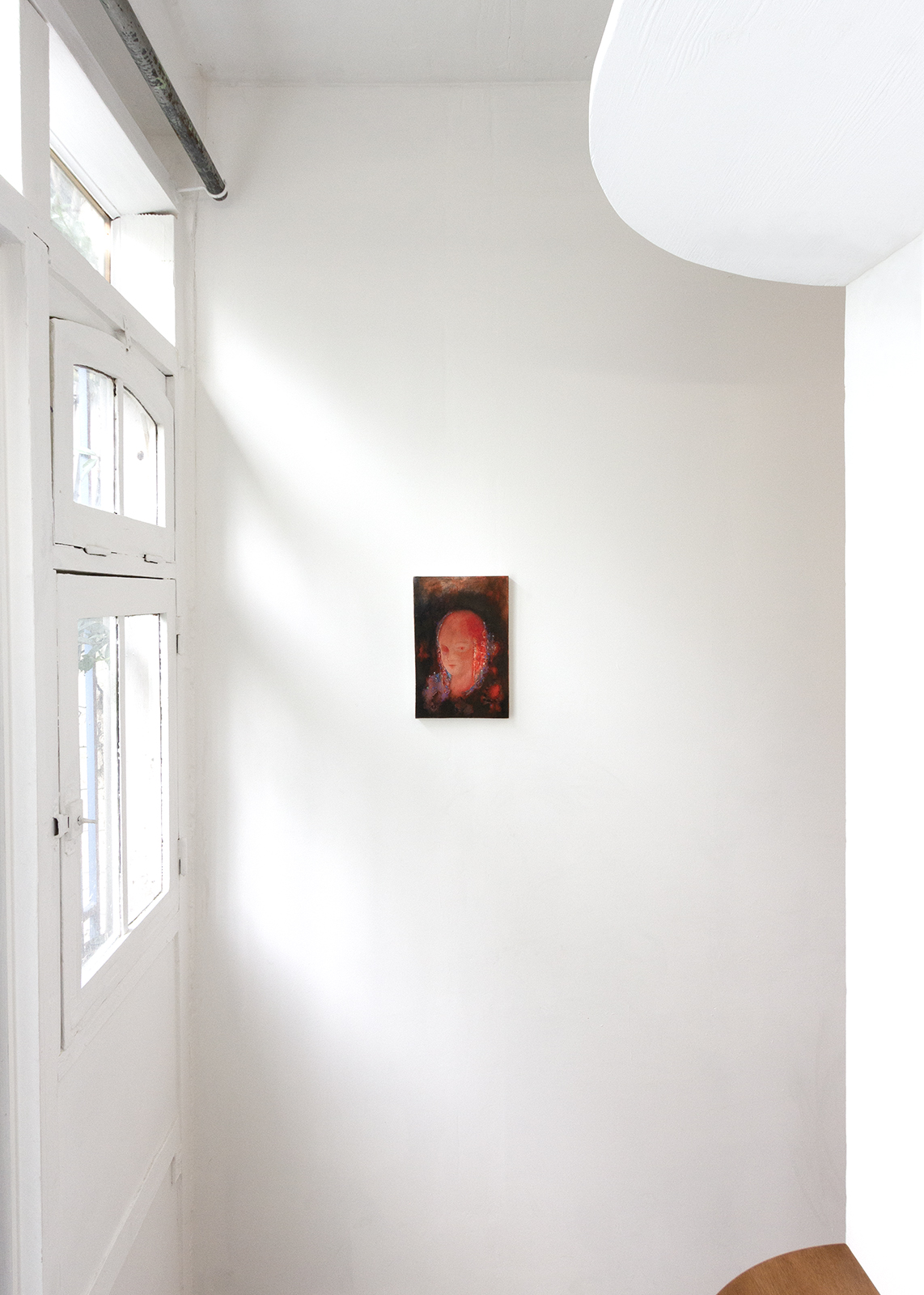
Exhibition view, draps de veillée, 2026, Lou-Maria Le Brusq, Pony, Montreuil.
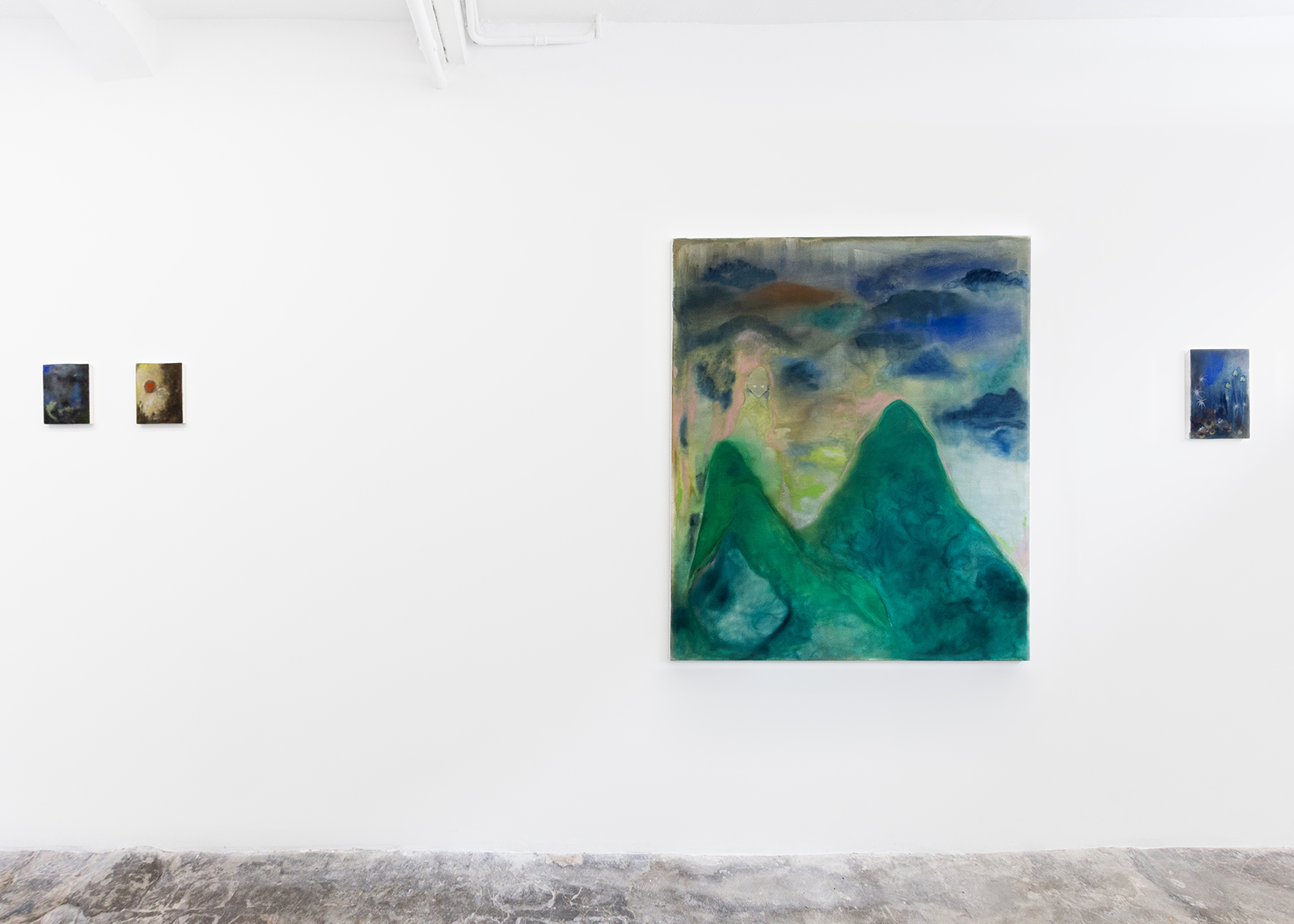
Exhibition view, draps de veillée, 2026, Lou-Maria Le Brusq, Pony, Montreuil.
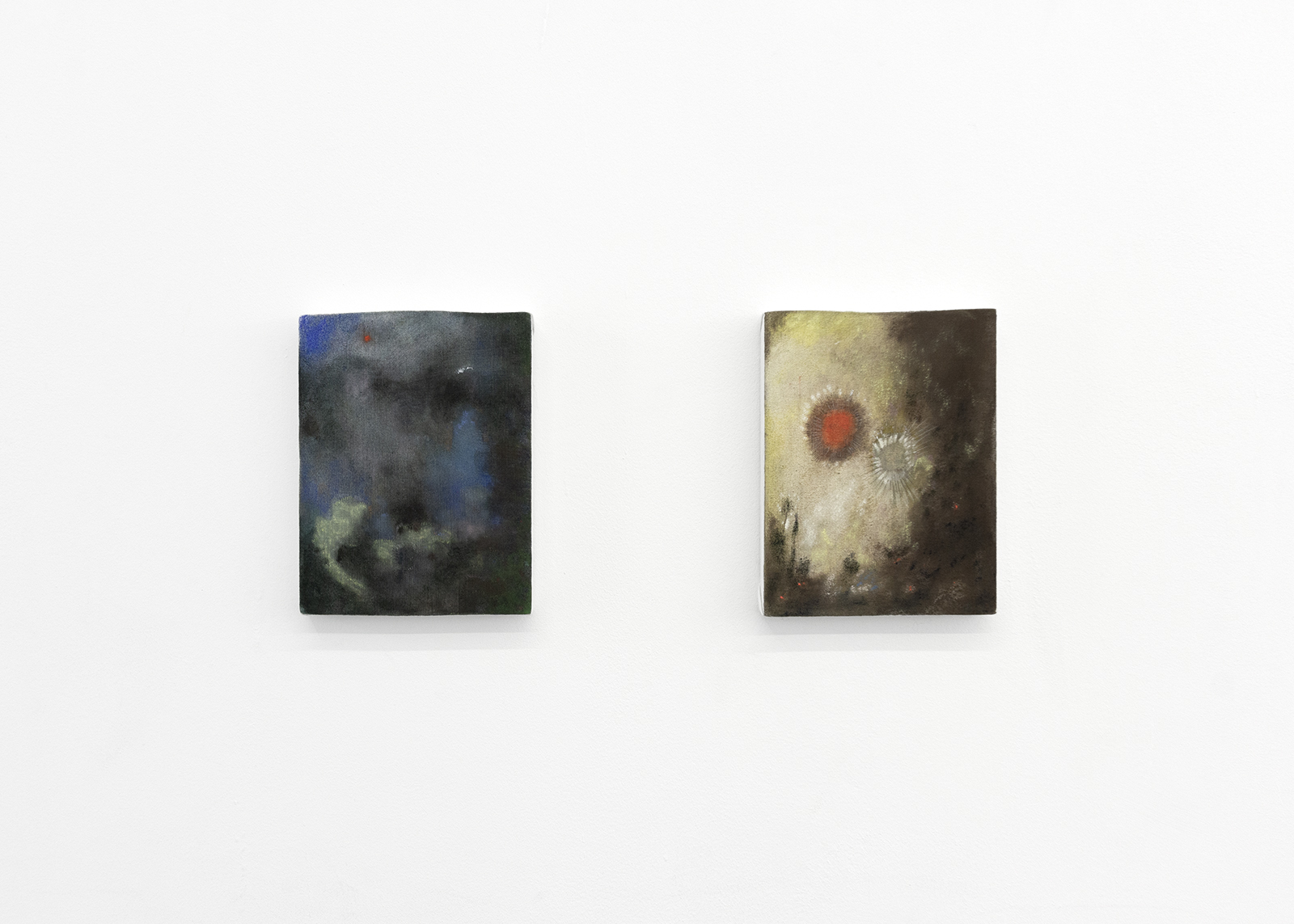
Exhibition view, draps de veillée, 2026, Lou-Maria Le Brusq, Pony, Montreuil.
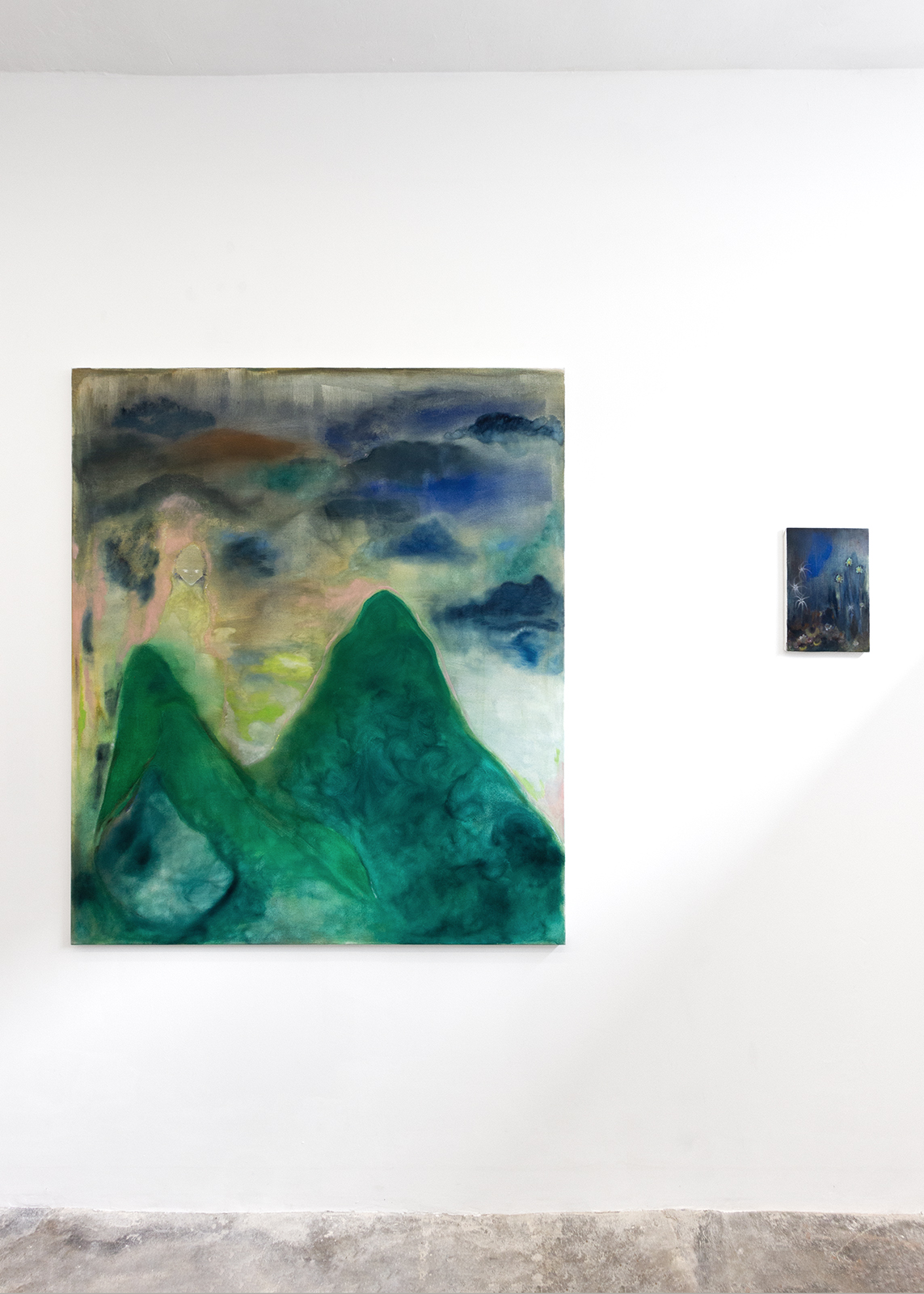
Exhibition view, draps de veillée, 2026, Lou-Maria Le Brusq, Pony, Montreuil.

Lou-Maria Le Brusq, pot-pourri, 2026, pigments, oil paint, soft pastel on linen sheet stretched over wood, 29,9 × 19,7 cm.
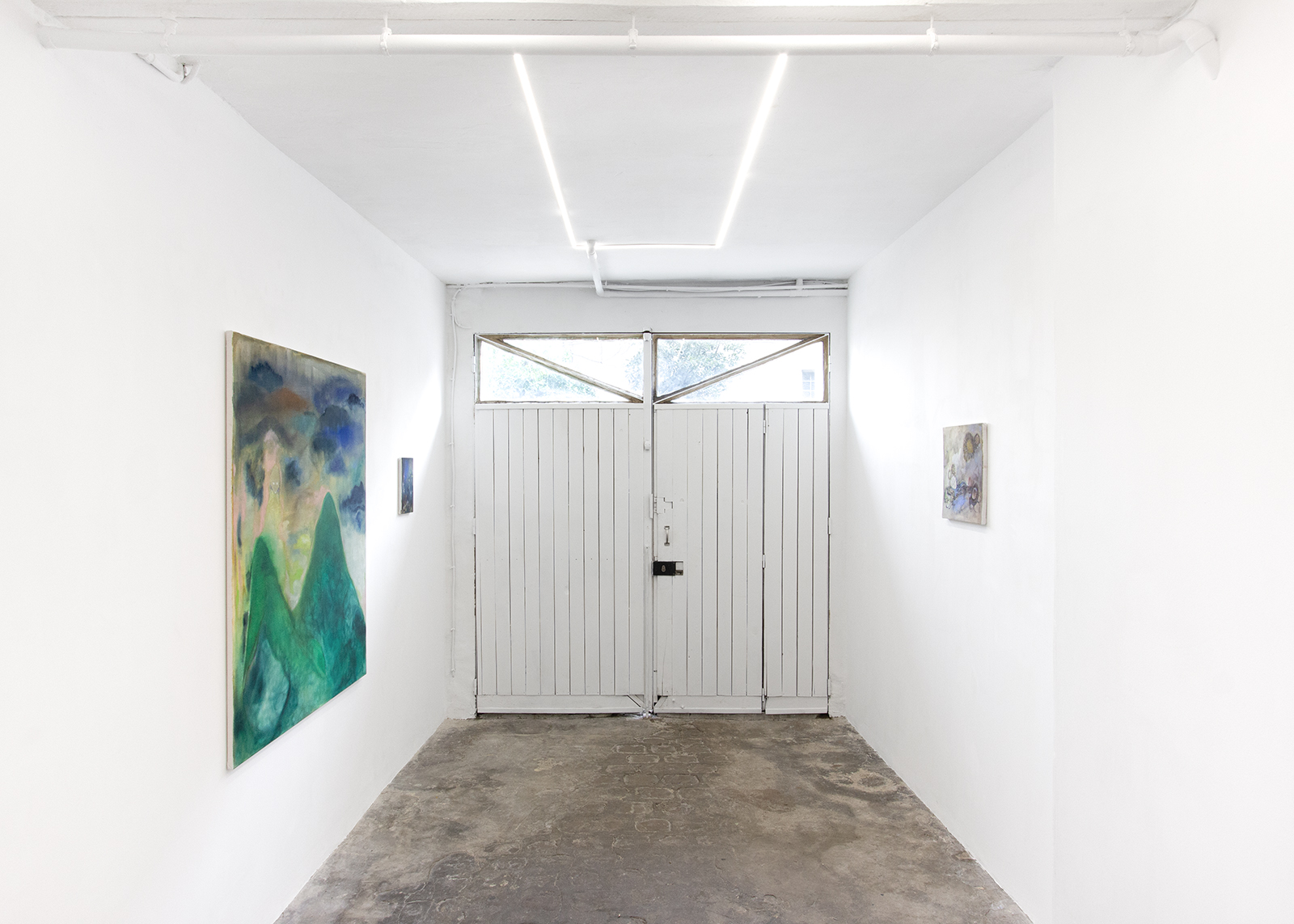
Exhibition view, draps de veillée, 2026, Lou-Maria Le Brusq, Pony, Montreuil.
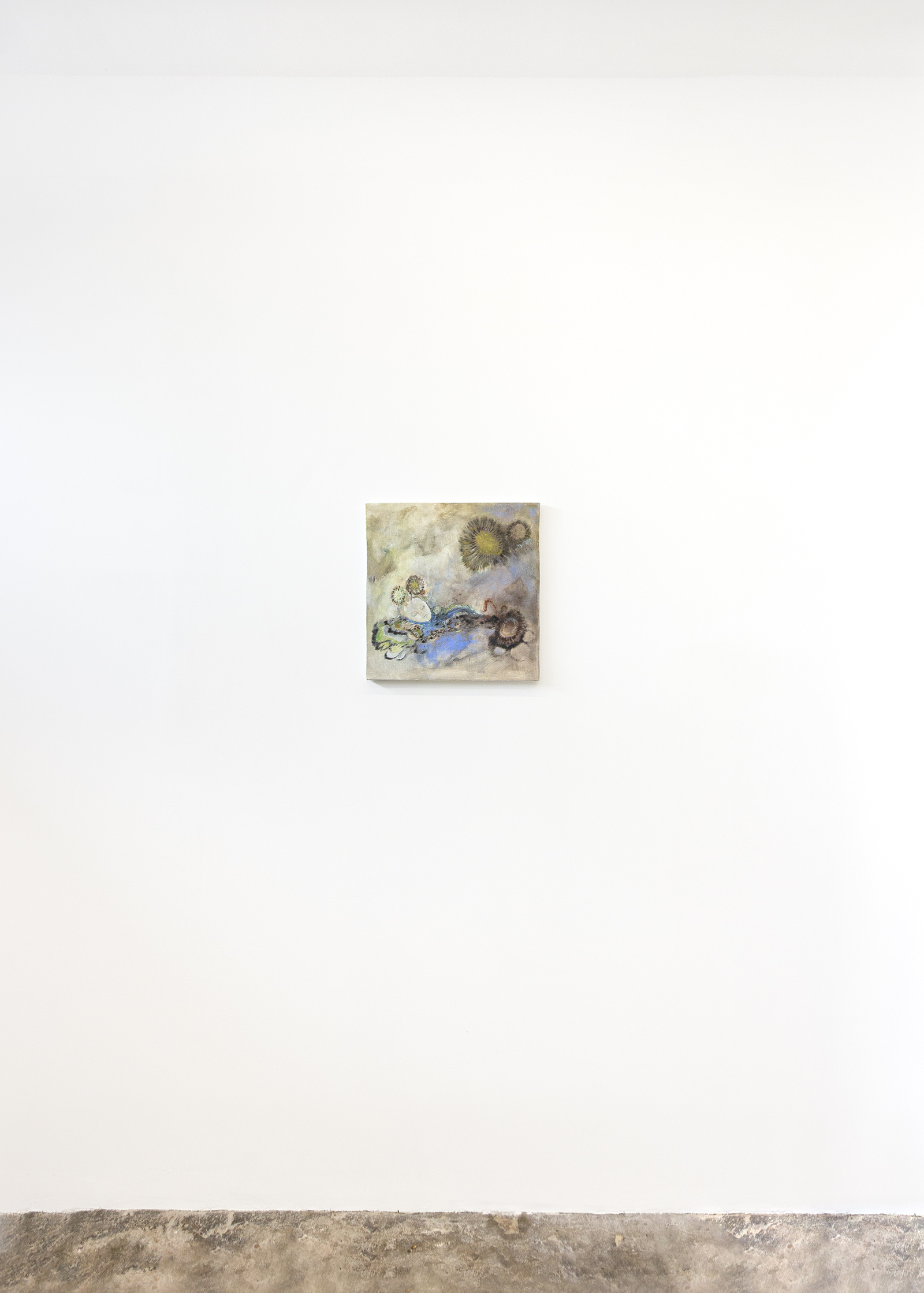
Exhibition view, draps de veillée, 2026, Lou-Maria Le Brusq, Pony, Montreuil.

Lou-Maria Le Brusq, l’heure d’avant, 2026, pigments, oil paint, soft pastel on linen sheet stretched over wood, 40 × 40 cm.
Courtesy of the artist and Pony, Montreuil
Newsletter
subscribe...

© Pony Montreuil 2025
Mentions légales
Paramètres des cookies